The Sentinel of Buckner Street
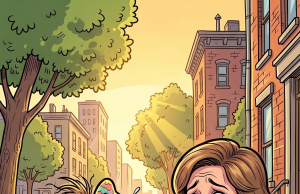
There is a specific kind of stillness that settles over Buckner Street in the late afternoon, a quiet so heavy it feels as though the entire neighborhood is holding its breath. I’ve lived in this corner of Decatur for nineteen years, and I’ve spent most of those years becoming an expert on the mundane. I know which sidewalk slabs are tilted by oak roots, I know the exact pitch of the brakes on the mail truck, and I know every dog’s bark within a four-block radius. Some folks might call it prying, but I prefer to think of it as a natural byproduct of living in a house that’s grown too large for one person. It’s not gossip; it’s just the way loneliness manifests when you have a front porch and nowhere else to be.
My name is Martha Jean Gable. I’m fifty-eight years old, a retired postal clerk, and I live in the same craftsman bungalow where I was raised. It has three bedrooms I don’t use and a mortgage that became a ghost of the past back in 2014. My life follows a rhythm as steady as a heartbeat: black coffee at sunrise, the local news at six, and a light extinguished by nine-thirty. I am a woman of habits, and on Buckner Street, habits are what keep the world spinning.
Next door to me lives Arthur Vance. He’s seventy-one, a widower who moves through his yard with the slow, deliberate care of a man who’s had his fill of surprises. Arthur’s constant shadow is a Golden Retriever named Scout. Scout is twelve years old, his muzzle is the color of winter frost, and his hips are so stiff from arthritis that he usually moves with the grace of a rusted gate. For the better part of three years, that dog has functioned as a piece of porch furniture, spending his days in a sun-drenched stupor.
So, when Scout began barking at the skeletal remains of an old refrigerator tucked behind Arthur’s shed on a Tuesday afternoon, the shift in the atmosphere was immediate.
The Obsession of an Old Dog
That refrigerator had been an eyesore long before I moved onto the block. It was a hulking, avocado-green relic of the seventies, rusted through at the base and sealed shut with layers of brittle duct tape. Arthur once mentioned that the thing came with the house—left behind by a previous tenant who lacked the strength or the desire to move it. It sat there for decades, slowly being reclaimed by the weeds and the damp Alabama air, a silent, useless monolith.
But that Tuesday, Scout was a different creature. He stood three feet from the rusted appliance, his front legs braced wide and his tail stiff as a rod. It wasn’t his usual, lazy “squirrel-is-on-the-fence” woof. This was a sharp, frantic, unrelenting sound that seemed to vibrate through his entire frame. He looked as though he were pointing a compass needle toward a magnetic north only he could perceive.
“Scout, that’s enough! Get your hide over here!” Arthur’s voice drifted over the fence, thin and exasperated.
The dog didn’t even twitch an ear. He just kept barking, his body racking with the effort. By Wednesday morning, the situation had escalated from a curiosity to a neighborhood concern. Scout hadn’t touched his food, and he refused to seek the shade of the porch. When Arthur finally lost his patience and dragged him inside by the collar, I could hear the dog scratching at the door from my own kitchen, a desperate, frantic sound that set my teeth on edge.
By Thursday, I found myself standing at my window, watching the dog return to his post the moment he was let out. His voice had given out, reduced to a hoarse, ragged rasp that sounded like dry leaves skittering over pavement. He would look at the fridge, then turn his cloudy eyes toward Arthur’s house, then back to the fridge. He was begging for a witness.
Arthur eventually stomped out into the yard, brandishing a broom like a weapon of war. “There is nothing in that piece of junk, you foolish dog! It’s a box of air and rust!” He slammed the broom handle against the metal door, but Scout didn’t flinch. Instead, the dog threw his weight against the seal and let out a long, mournful howl that made the hair on my arms stand up.
That’s when I caught it—a scent, faint and metallic, riding a stray breeze across the property line. It wasn’t the smell of rot, not exactly, but it was the smell of something that had been hidden too long.
The Pop of the Seal
I didn’t wait to talk myself out of it. I picked up the phone and dialed Arthur’s number, watching him through the glass. “Arthur, something is wrong with that machine. That dog has been trying to tell us something for three days, and I’m beginning to think he’s the only one with any sense left. Maybe we ought to just see what’s in there.”
Arthur’s voice was a growl of his own. “Martha, it’s probably a nest of rats or a dead raccoon that crawled into the insulation. I’m not about to throw my back out over a pile of garbage.”
“Fine,” I replied, my jaw set. “Then I’ll be over there with a pry bar in five minutes and do it myself.”
I pulled on my thick leather garden gloves and grabbed a heavy flathead screwdriver from the junk drawer. When I crossed the lawn and entered Arthur’s yard, Scout did something he hadn’t done in seventy-two hours: he went silent. He sat down on the grass, his chest heaving, and watched me with an intensity that felt like a physical weight. He let out a single, quiet whimper—a sound that translated perfectly to finally.
The duct tape was a mess of brown, peeling scales, but as I cleared the grime away from the handle, I saw a strip of silver tape underneath. It was clean. It was fresh. Someone had been into this “abandoned” fridge recently.
I wedged the screwdriver into the gap of the rubber seal and leaned my weight into it. The suction broke with a wet, heavy pop, and a rush of stale, stagnant air hit me square in the face. I pulled the door wide, the rusted hinges screaming in protest.
I didn’t find a dead animal. On the bottom rack, wrapped tightly in industrial-grade trash bags, was a massive bundle of cash. It was stacked in banded bricks—twenties and fifties mostly—packed so tight they filled the entire lower half of the compartment. Above the money, on the middle shelf, sat two thick manila envelopes and a small, charcoal-gray fireproof lockbox with a combination dial.
I took a step back, my heart thundering against my ribs. Scout stepped forward, his tail beginning a slow, rhythmic wag as he pressed his nose against the plastic-wrapped bundles.
“Arthur!” I shouted, my voice cracking as I looked toward the back door. “Arthur, you need to get out here right now!”
The Clerk’s Secret
Arthur stood in front of the open refrigerator for a long time, his face draining of color until he looked as gray as the Alabama dust. His hands hung limp at his sides, and he didn’t dare reach out to touch the fortune staring back at him. “That doesn’t belong to me,” he whispered, his voice hollow. “I’ve lived in this house for twenty years and I have never once put a hand on that handle.”
“Arthur, there’s a small fortune in there,” I said, trying to steady my own breathing. “This isn’t just pocket change.”
I believed him. Arthur Vance was a retired electrician who lived on social security and didn’t own a shirt without a fray at the collar. He wasn’t a man who hid seventy thousand dollars in a yard ornament.
The police arrived within the hour. There was a young deputy who looked like he’d rather be anywhere else, and a seasoned sergeant named Miller who had the tired, knowing eyes of someone who had seen the worst of humanity and survived it. They spent the evening in Arthur’s kitchen, counting the currency. It totaled seventy-three thousand, four hundred dollars. The manila envelopes held property deeds for two large lots on the north side of the city—land that had likely tripled in value since the documents were signed.
“Mr. Vance, who lived here before you?” Sergeant Miller asked, his pen poised over a notepad.
“A man named Silas Thorne,” Arthur replied. “He was a widower, same as me. I bought the place from his estate. I never actually met the man; I just signed the papers and moved in.”
The investigation moved with a quiet, bureaucratic speed. Three days later, Sergeant Miller returned to the street and sat down at Arthur’s table. I was there, too, mostly because Arthur was too rattled to face the law alone.
“Silas Thorne died in 1997,” Miller began, opening a manila folder of his own. “Before he retired, he worked as a senior clerk in the county records office for over thirty years. We did some digging into the old audits. In the early eighties, there were questions about filing fees and land transfers that never quite made it into the county coffers, but Thorne was a respected man. The evidence was thin, and the higher-ups decided to let it go when he retired.”
He slid a black-and-white photo across the table—a shot of a man in a crisp dress shirt standing in front of the courthouse. “He was skimming, Arthur. Small amounts over a very long time. He wasn’t a kingpin; he was just a man with a slow hand and a very long career. And it seems he spent his retirement hiding the evidence in plain sight.”
The Daughter in the Trailer Park
The sergeant then produced the fireproof lockbox, which they had opened at the station. Inside was a handwritten letter on yellowed stationery and a single, faded photograph of a young woman in her twenties, her hair styled in the fashion of the mid-eighties.
The letter was a confession written to no one in particular. It read: “For my daughter. I never found the words to tell her the truth. She deserved a better man than the one I became. This is all that remains of my life’s work. Use it to find the peace I never had. — S.T.”
On the back of the photo, written in a shaky pencil, was a name: Eleanor, 1984.
It took the department eleven days to track her down. Her name was Eleanor Thorne-Dawson. She was sixty-one years old, living in a dilapidated trailer park on the outskirts of Huntsville. She worked forty hours a week at a commercial laundry, earning just enough to keep the power on, and her hands were mapped with the scars of a life spent in hard labor.
She hadn’t heard from her father since she was a toddler. She hadn’t even known he was gone.
“He walked out the door when I was three years old,” she told the officers—a detail I heard later from Arthur. “My mother worked double shifts at the diner until her health gave out just to keep me in shoes. We never had a dime to our names. I grew up thinking he’d just forgotten we existed.”
Because the statute of limitations on the embezzlement had expired decades ago, and because the county had no interest in reclaiming funds from a man long since buried, the money and the properties were released to Eleanor in full.
She drove down to Buckner Street on a crisp Saturday in October. She was a small, silver-haired woman with eyes that had seen too much and said too little. She stood in Arthur’s backyard, her hands clasped in front of her, staring at the avocado-green fridge as if it were a monument to a ghost.
Then her gaze shifted to Scout. The dog was lying in the grass, his head resting on his paws as he watched the stranger. “Is this the one?” she asked softly.
“That’s him,” I said.
Eleanor knelt down—a slow, painful movement that mirrored the dog’s own stiff joints. Scout lifted his head, sniffed her calloused palm, and gave her fingers a long, steady lick. Eleanor began to cry then. It wasn’t a loud or dramatic display; it was just a quiet, steady stream of tears that soaked into the dry Alabama earth.
“My father never gave me a single thing in sixty years,” she whispered, her voice breaking. “And a dog I’ve never seen before just handed me my entire future.”
The Resting Place of a Hero
Eleanor stayed for dinner that night. Arthur, who hadn’t set a place for more than one person in five years, pulled out the good china. We had roast chicken and a quiet conversation that felt like the beginning of something new. Eleanor didn’t say much, but she looked around the kitchen with a sense of wonder, as if she were finally seeing the life her father had lived while she was struggling to survive.
Before she left, she used an old flip phone to take a single, grainy photo of the refrigerator. Arthur had it hauled away on Monday morning, leaving a patch of yellowed, dead grass where it had sat for thirty years.
Eleanor sold one of the north-side properties and bought a modest, sturdy house in Huntsville with a real garden and a porch of her own. She kept the other lot—the one that looks out over the Tennessee River—and she told Arthur that she goes there sometimes just to sit and watch the water. She thinks about the father she never knew, and the secrets men keep in the dark.
Scout stopped barking the moment the seal was broken. He went back to his spot on the porch, curled into a ball, and slept for nearly an entire day. He’s thirteen now, and his hips have finally surrendered to the point where he can barely manage the two steps down to the grass.
But every afternoon, without fail, he limps his way over to the spot where that avocado-green machine used to sit. He sniffs the ground, turns in a circle, and then looks up at my window with a look of profound, settled peace.
I asked Arthur once what he thought the dog actually smelled in that fridge. “Maybe it was the mildew,” Arthur said, leaning against the railing. “Or maybe it was just the smell of old paper and copper.”
“For three days straight, Arthur? Even when you yelled at him?”
He shrugged, his eyes following Scout as the dog settled back onto the porch. “Maybe he smelled something that didn’t belong in the dark. Maybe he just knew there was a debt that needed paying.”
Eleanor sends us both a card every Christmas. Last year, the photo showed her standing in front of her new white house, a bouquet of flowers in her hand and a look of quiet dignity on her face. On the back, in that same shaky handwriting that reminded me of her father’s, she wrote: Tell Scout I finally found my way home.
I taped that card to my own refrigerator—the working one in my kitchen. I see it every morning when I pour my first cup of coffee. And every morning, I look through the glass and see Scout on Arthur’s porch, his chin resting on his paws, watching the street with his cloudy, knowing eyes. He isn’t searching for anything anymore. He isn’t waiting for a witness. He’s just resting, and on Buckner Street, that’s a peace that’s been hard-earned.