The Rhythm of Courage
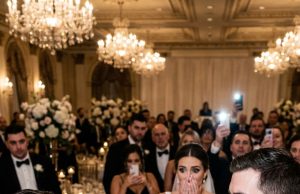
The grand ballroom was awash in a dazzling display of light, resembling a treasure chest flung open for a single evening.
Gleaming crystal chandeliers cast a golden radiance across the polished marble floors. The soft rustle of silk gowns filled the air, mingling with the crisp elegance of tailored tuxedos. Waves of orchestrated laughter drifted through the space, rising and falling in sophisticated crescendos. This was the pinnacle of the Whitmore Foundation’s calendar—an evening where affluence donned an armor of manners and charity was meticulously captured by a wall of flashbulbs.
Charles Whitmore stood on the periphery of the celebration, an untouched glass of sparkling water anchored to his palm. He was a man who had mastered the art of commanding a room without ever projecting his voice. At fifty-two, he had engineered a massive corporate empire out of cold data and absolute discipline, yet none of his boardroom strategies could alleviate the suffocating weight pressing against his ribs tonight.
His focus was entirely locked onto his son.
Evan sat near the perimeter of the parquet dance floor, his shoulders squared and his fingers loosely interlocked over his lap. His custom-built wheelchair—sleek, high-end, and minimalist—hovered directly behind him like a silent, faithful sentinel. Beneath the crisp lines of his formal trousers sat the architecture of his new reality: a pair of advanced prosthetics, midnight-black, highly precise, and entirely unapologetic. Evan wore a polite, practiced smile—the specific kind of mask adopted early by children who discover how easily their personal triumphs can be transformed into a public exhibit.
Charles had continuously assured himself that attending the gala would be a transformative milestone for the boy. A grand celebration. Absolute validation that a human life does not cease after a catastrophic loss. Proof that his flesh and blood belonged in whatever elite circle he chose to navigate.
But a darker, heavier truth plagued Charles’s conscience: he had systematically engineered every variable of his son’s environment except the one element that actually mattered. He had drafted architectural blueprints for ramps, secured elite private drivers, and dictated table arrangements, yet he possessed absolutely no mechanism to manufacture internal fortitude for his boy. Evan had severed his relationship with dancing years ago—manifesting the moment the initial applause of the rehabilitation clinic faded and the stark realities of an altered life took over.
The orchestra transitioned into a new arrangement. Couples drifted onto the floor in synchronized pairs. Evan tracked their movements with an expression Charles recognized instantly—a deep, visceral fascination masked by a wall of emotional detachment.
Then, she breached the perimeter.
She navigated the crowded floor with the natural, fluid grace of someone accustomed to moving through chaos, balancing a heavy silver serving tray with absolute ease. Her uniform was basic: a plain black dress, a starched white apron, and her hair secured back away from her face. Her identification badge caught the amber light, reading: AMARA.
Initially, Charles barely spared her a glance. To a man of his stature, hospitality staff existed as part of the background architecture—functional, silent, and entirely transparent.
Right up until she halted.
Amara came to a stop beside Evan’s position. She didn’t approach with the mechanical deference of a server offering a flute of champagne; she approached with the deliberate intent of a human being truly acknowledging another soul. She leaned in slightly, murmuring a few quiet words, causing Evan to look up in sheer surprise. Their gazes locked.
Charles experienced a sudden, unfamiliar spike of irritation. The foundation gala was governed by an unwritten, unyielding social matrix. The guests participated in the entertainment; the staff facilitated the service. Strict boundaries ensured the evening proceeded without friction.
Evan spoke a brief reply. Amara’s face lit up with a brilliant smile.
And then—shattering every protocol of the venue—she quietly set her silver tray flat onto a vacant high-top table.
A collective intake of breath rippled through the immediate vicinity, subtle but incredibly sharp. Heads turned in rapid succession. A senior violinist faltered for a fraction of a beat, fracturing the melody.
Amara extended an open hand toward the young man.
“Would you care to dance with me?” she inquired softly.
The entire ballroom seemed to lose its breath.
Charles took an involuntary step forward, his analytical mind firing alarms. This was entirely inappropriate. Unrehearsed. Highly volatile. His son had already endured an ocean of well-meaning pity and public clinical trials. Charles opened his mouth to project his authority and shut the interaction down—
And then, Evan laughed.
It wasn’t that measured, polite curvature of the lips he reserved for the photographers. It was a genuine, chest-deep laugh, startled and beautifully bright. He glanced down at the constraints of the wheelchair, then at his carbon-fiber limbs, before looking straight back into her eyes.
“I… I haven’t tried to do this in years,” he admitted, his voice carrying across the quiet space.
“That’s completely fine,” Amara responded with immense gentleness. “We can figure out the steps as we go.”
She didn’t scan the crowd for reactions. She didn’t seek out Charles’s disapproving silhouette. Her world had narrowed entirely to Evan, as if the rest of the opulent ballroom had dissolved into smoke.
Slowly, deliberately, Evan anchored his palms to the plastic armrests. With a focused, practiced concentration of mass, he pushed his weight upward. He stood.
An absolute, heavy hush fell over the room, so profound that Charles could hear the ambient hum of the overhead track lighting.
Evan executed one forward shift of his weight. Then he completed a second. The advanced prosthetics responded with a low, mechanical precision. Amara instantaneously synchronized her balance to match his—never pulling, never forcing leverage, simply mirroring his trajectory. Her grip was unshakeable, her expression entirely serene, as if this improvised choreography were the most natural occurrence in the universe.
The orchestra found their rhythm.
The arrangement swelled—not with an aggressive spike in volume, but with a deep, resonant fullness, as if the musicians themselves had shifted their souls into the performance. Evan crossed the threshold onto the hardwood floor. Amara guided his frame into a foundational, steady cadence. There were no elaborate spins, no dramatic dips. Just pure, unadulterated movement. Together.
A solitary burst of applause erupted near the rear exit doors. Then more hands joined the cadence. Within seconds, the thunderous sound consumed the entire ballroom, raw, unbridled, and completely unrestrained.
Charles felt a fierce, burning constriction seize his throat. His vision blurred entirely.
In the reflection of the glass, he visualized Evan at six years old, spinning barefoot across the kitchen tiles without a care in the world. He remembered the catastrophic dawn phone call from the emergency services. He remembered the sterile glare of the surgical wing and the endless, agonizing nights spent bargaining with the universe. He remembered promising his fragile son that existence would retain its beauty—and secretly wondering, in the dark hours, if that was simply a beautiful lie parents manufacture to survive the weight of reality.
Out on the floor, Evan laughed a second time. He suffered a momentary stagger, lost his alignment, found his balance against her hand, and maintained his momentum. Amara didn’t rush to over-correct his posture. She didn’t lecture his technique. She simply celebrated the raw act of movement itself.
The moment the final note faded into the air, the auditorium erupted into chaos.
Evan executed a tentative, ecstatic bow—and the ovation surged to an even greater volume. Amara calmly retrieved her silver tray, offered him a brief nod like a theatrical partner concluding a shared secret, and slipped seamlessly back into the sea of uniforms.
Just like that.
As if she hadn’t just systematically dismantled the entire architecture of the evening.
Breaking the Boundary
Charles stood frozen for a few seconds longer, before moving across the marble with absolute purpose. He intercepted her near the restricted service corridor, where she was calmly polishing a crystal glass, already receding into the invisible background she had fractured mere minutes before.
“Excuse me,” he spoke up, his voice dropping to an authoritative register.
She turned to face him. Her expression was perfectly calm, respectful—but entirely devoid of deferential fear.
“That young man is my son,” Charles delivered, the syllables catching heavily in his throat. “You didn’t seek permission from anyone to execute that scene.”
Amara offered a slow nod. “I sought permission from him, sir.”
A prolonged, heavy silence stretched across the corridor.
“I truly hope I didn’t cause an administrative issue,” she added, her voice dropping into a gentle cadence. “He simply possessed the look of someone who was starving to dance.”
Charles swallowed hard, his corporate armor disintegrating. He looked at her—really analyzed the woman standing before him. The unshakeable clarity in her eyes. The quiet, internal confidence. The total absence of social intimidation.
“What internal motivation possessed you to take that risk?” he gapped.
She offered a small, deeply honest smile. “My brother lost his leg in an accident when we were young children. He used to tell me that the most brutal part of the journey wasn’t the agonizing process of learning how to operate the prosthetics. It was the endless waiting for someone to finally stop being terrified of his vulnerability.”
Charles felt a tectonic shift occur within his own heart—an ancient, rigid foundation fracturing to create a sanctuary for a much more profound truth.
“My son ceased his movement because the collective world instructed him to operate with absolute caution,” Charles uttered softly. “Tonight, you commanded him to live.”
Amara gave a light, unassuming shrug of her shoulders. “In my experience, those two concepts are identical.”
Later that night, as the gala concluded and the guests dissolved into the cool midnight air, Charles stood by the glass doors, watching Evan surrounded by an entourage of genuine well-wishers—standing tall on his own strength, his eyes pulsing with light.
The massive financial empire Charles had spent a lifetime constructing suddenly felt incredibly small compared to the magnitude of this singular moment.
Before exiting the property, he located the managing event director.
“I want you to draft a formal corporate contract for Amara immediately,” he commanded. “And not within the hospitality sector.”
The director blinked, thoroughly confused. “Sir? I don’t follow.”
“Identify whatever professional trajectory she desires to explore within our infrastructure,” Charles continued, his voice unshakeable. “Logistics, community development, corporate outreach. Allocate whatever resources are required for her training. And double her current compensation effective tonight.”
When the automated chime of the wheelchair signaled Evan’s arrival at his side, the boy looked up, his face tired but completely radiant. Charles reached down, placing a heavy, reverent hand upon his shoulder.
“Dad,” Evan whispered, his voice thick with a newfound wonder. “I actually danced tonight.”
Charles offered a beautiful smile through a sudden rush of tears. “I saw you, son. You absolutely did.”
And navigating the drive home through the quiet city streets, Charles finally internalized the core truth of his wealth: the trajectory of the night hadn’t shifted because of capital, or legacy, or institutional prestige.
Everything had transformed simply because one woman possessed the clarity to see a human being—refusing to look at a wheelchair, refusing to focus on prosthetics, and refusing to calculate the risk—before inviting him to lead the way.