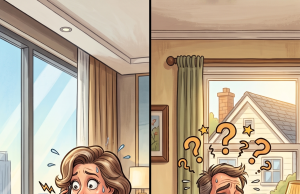
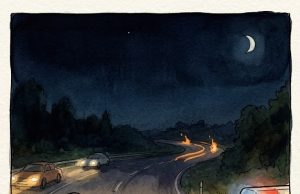
I stood in the doorway of the room I’d slept in for twelve years, fingers locked around the handle of a faded floral suitcase that belonged to another era.
It carried the soft scent of lavender sachets, mothballs, and a life that had quietly been taken from me. My hands shook—not because I was seventy-five, and not because last winter’s Parkinson’s scare still lingered in my mind—but because disbelief was vibrating through my bones like a live wire.
“We’re putting you in a nursing home. You’re too old to be useful.”
Jacqueline, my daughter-in-law, had said it less than thirty minutes ago, as casually as someone reading a grocery list. She didn’t even pause while pouring herself a glass of chilled champagne for the New Year’s Eve party downstairs.
The party I wasn’t invited to.
My son, Mason—my only child, the boy I raised alone on a shoestring after his father died of a sudden heart attack—had stood behind her. He stared at the expensive Italian slate tiles they’d installed last spring. Tiles I’d helped pay for with the modest inheritance my parents left me.
He didn’t defend me.
That silence hurt more than her words ever could.
“Mom… it’s for the best,” he finally mumbled, eyes fixed anywhere but my face. “You’ll have people your age. Activities. Bingo. It’s… a nice place.”
A nice place—like loneliness could be solved with fluorescent lights and scheduled fun.
I’d moved in after my husband passed, back when Mason insisted I shouldn’t live alone. That was before Jacqueline. Before the suburban McMansion. Before I became background noise. I cooked their meals, scrubbed their floors, babysat their children until the boys grew old enough to be embarrassed by a grandmother who didn’t match the new décor. I learned to stay quiet, to stay useful, to stay out of the way—believing usefulness meant I still belonged.
It didn’t.
Now I was simply old. An inconvenience occupying the guest room Jacqueline wanted to convert into a meditation studio.
Downstairs, the house pulsed with preparations. Caterers in crisp white coats moved through the kitchen like a coordinated swarm. Florists arranged dramatic white lilies in the living room. I wasn’t allowed to sit in there anymore—I might “clutter the aesthetic.” Dinner had been a ham sandwich on a paper plate, eaten alone in my room while the rich scent of truffle oil and roasting beef drifted under my door like a cruel reminder of where I didn’t belong.
I looked around my little space one last time. Photos on the nightstand: Mason at seven with a gap-toothed grin; Mason in his cap and gown; Mason at his wedding, where I wore a dress Jacqueline called “quaint” in the voice that really meant hideous.
This was what my life had shrunk into—small, apologetic, waiting to fade out.
But there was one thing they didn’t know.
The country house.
My parents left it to me—a modest shingled cottage two hours north in Millbrook, a town I hadn’t seen since their funeral eight years ago. It was probably drafty, probably aging badly, but it was mine. Mason didn’t know because I never put his name on the deed. Even back then, some instinct told me to keep one thing untouched. One thing no one could redecorate out from under me.
Forty minutes ago, watching Jacqueline laugh with her friends and point at paint swatches for “her” new room, I made my decision.
I wasn’t going to any nursing home.
I was leaving tonight—before the paperwork, before the arrangements, before they could dispose of me like outdated furniture.
My savings were small: about three thousand dollars in a credit union account they didn’t know existed. It wasn’t much, but it was a beginning. It had to be.
I packed fast, taking only what I could carry—clothes, toiletries, my mother’s quilt, the photographs, and a small wooden box holding my wedding ring and the last birthday card my husband ever gave me.
Writing the note was the hardest part. I sat at the little desk by the window, listening to champagne corks pop downstairs, and searched for words that didn’t taste like bitterness.
I won’t be a burden anymore. Don’t look for me. I hope your party is everything you wanted.
I placed it on the pillow and slipped out while everyone was outside admiring the fireworks setup.
No one saw me leave.
No one had truly seen me in months.
The bus station on New Year’s Eve felt like a sanctuary for people with nowhere else to go. Most families were together—real families, the kind that saved you a seat. I sat on a bolted plastic chair with my suitcase wedged between my ankles, studying the schedule.
One bus to Millbrook left at 10:47 p.m.
It was 9:15.
The fluorescent lights hummed overhead, turning everything a sickly shade of pale green. A tired man slept across three chairs near the vending machines. A young couple argued softly in Spanish by the ticket counter.
I watched the minutes crawl across the digital clock. Every second pulled me farther from the life I’d known and closer to a future I couldn’t picture.
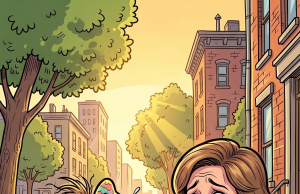
That’s when the tears hit.
Not polite tears. Not quiet ones.
These were deep, shaking sobs that tore through my chest like grief finally demanding space. It wasn’t just sadness—it was the pain of being reduced to a problem. The horror of realizing the child you raised through fevers and nightmares could stand behind his wife while she erased you.
I pressed a gloved hand to my mouth, embarrassed even here for taking up air.
“Ma’am… are you okay?”
I lifted my head through blurred vision and saw a young woman crouched in front of me. Early thirties, kind eyes, dark hair in a practical ponytail. Medical scrubs peeked out from under her winter coat.
“I’m… fine,” I managed—the automatic lie. “Just… a rough day.”
She didn’t move. “You don’t look fine. Do you want me to call someone? Family?”
The word family cracked something open and I let out a jagged laugh that startled both of us.
“No,” I said. “No family. Not anymore.”
She sat in the empty chair beside me, steady and warm like an anchor.
“I’m Debbie,” she said softly. “I’m a nurse, and I’m a pretty good listener. My bus doesn’t leave until eleven. I can sit with you.”
Maybe it was her tone. Maybe it was years of swallowing pain. Maybe it was the safety of a stranger.
Whatever it was, I told her everything—Jacqueline’s words, Mason’s silence, the meditation room, the nursing home threat, the invisible years, the ham sandwich on the paper plate. I told her about Millbrook. About the three thousand dollars meant to be my restart.
She listened without interrupting. At some point her hand found mine and held on, warm and real, proof that I wasn’t a ghost.
When I finished, she went quiet, then pulled out her phone.
“I need to make a call,” she said gently. “Is that okay?”
I nodded, too emptied out to protest.
She stepped a few feet away, voice low but urgent. I caught pieces. “I found her… yes, I’m sure… the bus station… Dad, you need to come now.”
She returned and sat beside me again. “Help is coming. I promise. Just stay with me.”
I blinked through the numbness. “I don’t understand… who’s coming?”
Her expression shifted—like she was looking at something miraculous and impossible all at once.
“Mrs. Baker,” she said, “did you ever teach kindergarten? A long time ago?”
The question felt random. “Yes,” I answered slowly. “Thirty-seven years. Why?”
“Did you ever have a student named Dale? Dale Martinez?”
The name stirred dust in the attic of my memory—crayons, paste, sunlight in a classroom window.
Dale.
So many children… but I remembered him. Immigrant parents. Canvas shoes in winter, two sizes too small, holes at the toes. A boy with enormous dark eyes and an aching hunger to learn. His parents worked themselves ragged, proud and exhausted, refusing charity—but their son was freezing.
So I bought him shoes. A warm coat from a thrift store. New notebooks. And I told him they were “extras” from the lost-and-found so he wouldn’t feel ashamed.
I’d never told anyone.
“You remember,” Debbie whispered, watching my face.
“I remember Dale,” I said. “He was bright. But… why are you asking me that?”
Tears filled her eyes. “Because he’s my father. And he’s been looking for you for forty-five years.”
The station felt like it tipped sideways.

“Your father?” I repeated. “Dale Martinez is your father?”
She nodded, squeezing my hand. “He talks about you all the time. Mrs. Baker—the teacher who changed everything. He tried to find you, but you moved after retirement and the records were gone. He hired investigators. He searched everywhere. And tonight… I find you here.”
I shook my head, overwhelmed. “I didn’t do anything special. I just bought a child shoes.”
Debbie’s voice cracked. “You did more than that. You made him feel seen. You taught him kindness exists. You gave him a reason to believe life could be bigger.”
She swallowed hard. “He earned scholarships. Went to college, then law school. He’s one of the most successful attorneys in the state—immigration and family law. He fights for people who have no one. And he says it started with you.”
I couldn’t speak. My throat tightened around emotion too big to carry.
“He calls it the Baker Fund,” she said with a watery laugh. “Every year he donates shoes, coats, backpacks for low-income kids—anonymously, in your name. For twenty years.”
The harsh lighting felt different now—less hostile, more like a stage where something unbelievable was about to happen.
“How did you recognize me?” I asked. “You weren’t even born.”
“The photos,” she said, showing me her phone. A black-and-white classroom picture from 1980. There I was, forty-five years younger, hands resting on the shoulders of a little boy in the front row. “Dad keeps this on his desk. He’s described you a thousand times. When I saw you crying… I just knew.”
She leaned closer, voice lowering. “I need you to know—Dad is protective. When I told him what your son and daughter-in-law did… I’ve never heard him that angry.”
Anxiety fluttered in my chest. “I don’t want trouble. I just want to go to my parents’ house.”
“There’s a difference between trouble and justice,” Debbie said firmly. “And there’s a difference between being alone and being cared for. You gave him a chance when he had nothing. Please… let him return it.”
Before I could answer, the station doors slid open.
A man walked in with the kind of presence that parted the room without effort. Tall, confident, wearing a cashmere coat over a tuxedo like he’d stepped out of a gala and into destiny. Gray touched his temples, but when I saw his face—
I saw it.
The dark eyes. The determined chin. The echo of a boy in worn shoes.
He scanned the station, found me, and the years collapsed.
“Mrs. Baker,” he said, voice rough with emotion.
“It’s really you,” I whispered, standing on trembling legs. “Dale… little Dale Martinez.”
He smiled—shy and grateful, just like the child I remembered. “Not so little anymore.”
Then he crossed the distance and hugged me. He smelled like expensive cologne and something I hadn’t felt in a long time.
Safety.
“I can’t believe Debbie found you,” he murmured. “After all these years.”
He pulled back, hands on my shoulders, eyes sharp with concern. “She told me everything. Your son. The nursing home. The way they treated you.”
I lowered my gaze. “I’m just a foolish old woman who—”
“Stop,” he said gently, but it was an order. “You are not foolish. You’re the woman who saved my life. You taught me I mattered. Now I’m going to prove to you that you still do.”
He handed me a business card: Dale R. Martinez, Senior Partner.
“We’re not putting you on a late-night bus to some drafty cottage,” he said. “You’re coming with us. My wife, Sue, already has the guest room ready. We have space. We have resources. And we have forty-five years of gratitude to return.”
“I couldn’t possibly—”
“You can,” he said, smiling again. “Please, Mrs. Baker. Let me give you what you gave me.”
I looked down at my bus ticket. Then at Dale and Debbie standing beside me like guardian angels.
“And Mason?” I whispered. “When he finds my note…”
Dale’s expression hardened into something calm and professional.
“Leave your son to me.”
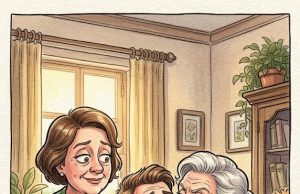
Dale’s home was a sanctuary—large, yes, but full of warmth. Sue greeted me with teary eyes and a bowl of homemade pozole that melted the cold out of my bones. I slept in high-thread-count sheets that smelled like lavender, and for the first time in months, I didn’t wake up wondering how to make myself smaller.
New Year’s morning, the kitchen filled with the noise of Debbie’s children—“honorary grandkids,” they decided—begging for stories about Grandpa Dale as a boy.
But at 10:00 a.m., the real work began in Dale’s office.
“I called Mason last night,” Dale said, sitting behind a heavy oak desk. “He didn’t answer. I left a message identifying myself as your counsel.”
“He called back ten minutes ago,” he continued, sliding a legal pad toward me. “He’s panicked.”
“Angry?” I asked, stomach tight.
“Terrified,” Dale corrected. “When a senior partner calls and uses phrases like elder abuse, financial exploitation, and attempted unlawful institutionalization… people suddenly pay attention.”
“I don’t want to sue him,” I said, voice small.
“You won’t have to,” Dale promised. “But we will set boundaries. Tell me what money you gave them.”
I told him about the $65,000 down payment. The Social Security checks absorbed into “the household account.” The fact my name wasn’t on the deed.
Dale took notes, jaw tightening with every detail.
“Here’s what happens next,” he said. “I’m sending a formal letter today. We demand a full accounting. We demand repayment with interest. And we notify them that contacting you directly will be harassment.”
“Will Mason comply?”
“He’ll have to,” Dale said. “Because if he doesn’t, I will make this public, legal, and painful. He knows it.”
The phone rang—Mason Turner.
Dale put it on speaker.
“Where is she?” Mason’s voice came out sharp and high. “I want my mother!”
“Mr. Turner,” Dale said, calm as ice. “Mrs. Baker is safe. She has chosen not to speak to you.”
“This is kidnapping! She’s confused!”
“I’m not confused, Mason,” I said, leaning toward the phone, surprised by the steadiness in my own voice.
“Mom?” His tone cracked. “Mom, please come home. Jacqueline didn’t mean it. We were just stressed.”
“You agreed with her,” I said. “You stood there while she called me useless.”
“I— I should’ve handled it better.”
“No,” I said, feeling something lift in my chest. “You should’ve felt differently. You treated me like furniture. I’m done being furniture.”
“Mom, please—”
“Mr. Turner,” Dale cut in. “You will receive my letter by courier today. Ten days to return Mrs. Baker’s funds. Do not test me.”
Dale ended the call. The silence afterward felt clean.
“You did well,” Dale said quietly.
“I feel… sad,” I admitted.
“That’s normal,” he said. “But you’re free.”
Three months later, spring warmed the new floorboards of my cottage in Millbrook.
It wasn’t a drafty little place anymore. Dale sent contractors. They replaced the roof, updated the wiring, painted the walls a soft buttery yellow, cleared the garden where crocuses pushed up through the soil.
It was mine.
I volunteered at the library reading to children. Neighbors brought cakes. Dale and Sue came every Sunday for dinner.
And I got justice.
Mason returned the money—$78,000 with interest—within a week, terrified of a lawsuit.
Karma did the rest.
Debbie told me Jacqueline filed for divorce a month after I left. Without a free maid and babysitter, and with scandal pressing in, the perfect image cracked. Mason moved into a small downtown apartment. The big house was gone.
One afternoon I was arranging daffodils in a vase when the doorbell rang.
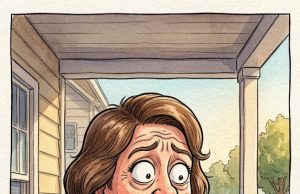
I opened the door—and there stood Mason.
He looked older, thinner, lost. In his hands was a small bouquet of grocery-store carnations, like an apology he didn’t know how to hold.
“Hi, Mom,” he whispered.
I didn’t step aside. I didn’t invite him in. I stood there, steady in my own doorway.
“How did you find me?”
“Dale’s office sent the check here,” he said. “I just… I needed to see you.”
His eyes drifted past me into the warm renovated living room. “It’s… beautiful.”
“It is,” I said simply.
He looked down. “Jacqueline is gone. The boys are angry. Tyler told me I deserved it—for throwing you away.”
Then he looked up, eyes wet. “I’m sorry. I know I said it before, but… I understand now. I chose the easiest path, and I lost the one person who loved me without conditions.”
It was the apology I’d wanted on New Year’s Eve.
But I wasn’t the same woman anymore.
“I appreciate you saying that,” I told him.
“Can we… try again?” he asked, voice desperate. “Can I come for dinner?”
I looked at him—my son, the child I loved, the man who shattered me.
“Not today,” I said.
He flinched, but I continued.
“I love you, Mason. But trust is heavy. When you drop it, it takes time to gather the pieces. I need time. I have a life here. I have friends. I have family who chose me.”
He nodded slowly. “Can I call you next week?”
The anger was gone. In its place was a quiet strength.
“You can call,” I said. “And if I’m not busy, I’ll answer.”
He nodded, set the flowers on the porch railing, and walked back to his car.
I watched him drive away, then picked up the carnations and stepped inside.
I closed the door—not out of rage, but out of peace.
My phone buzzed. Dale.
Sue’s making enchiladas. Bring your appetite Sunday. The grandkids miss you.
I smiled, typing back: I’ll be there.
I wasn’t useless.
I wasn’t invisible.
I was Mrs. Baker—the woman who bought a pair of shoes forty-five years ago… and somehow, in the end, was given the world back.
Happy New Year, indeed.