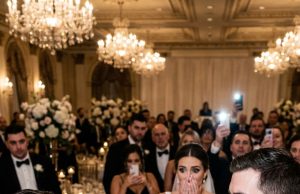
The restaurant La Azucena pulsed with a warmth that appeared only once a year.
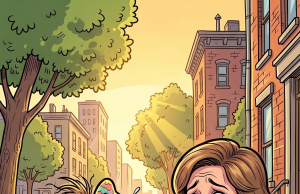
It was Mother’s Day in Polanco, one of Mexico City’s most refined neighborhoods, and the air shimmered with the mingled aromas of luxury perfume, fresh-cut roses, and carefully plated cuisine. For most people, it was a day of celebration. For Fernanda, it was an endurance trial.
At twenty-eight, she straightened her black apron with unsteady fingers, bracing herself as families streamed inside. Every child’s giggle, every kiss pressed to a mother’s cheek, every whispered “Happy Mother’s Day” echoed painfully inside her chest—reminders of the life she had been told she would never have.
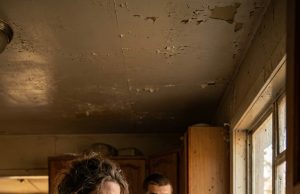
Three years earlier, a devastating diagnosis had rewritten her future. Severe endometriosis. Emergency surgery. A single sentence from a doctor that ended everything: You won’t be able to conceive. The dream of motherhood disappeared—and with it, the fiancé who couldn’t imagine a family without biological children. Since then, Fernanda had buried herself in work, mastering the rhythm of service, saving every peso toward a distant hope of opening her own café. But that Sunday, the armor she wore daily felt unbearably heavy.
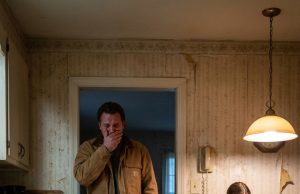
Outside, a sleek black sedan stopped at the valet. Inside the car, silence pressed down hard. Antonio Navarro—millionaire, strategist, man accustomed to control—gripped the steering wheel, his palms damp. In the back seat, his seven-year-old daughter, Ana Julia, gazed out the window. She wore a pale blue dress that made her eyes glow—the same eyes her mother, Carmen, once had.
“Dad,” Ana Julia asked quietly, “why are we here if today is for moms… and there’s only us?”
Antonio swallowed. “It’s tradition, sweetheart. Your mom and I used to come here. Being here helps me feel close to her.”
What he didn’t say was how lost he felt. Since cancer had taken Carmen three years earlier, he had been raising their daughter with no roadmap, terrified that he wasn’t enough, that he couldn’t fill the emptiness her mother had left behind. Hand in hand, they entered the restaurant—two quiet souls drifting through a room full of celebration.
The maître d’, Javier, seated them at table four, tucked beneath the purple shade of a jacaranda in the courtyard. That section belonged to Fernanda. The moment she noticed them, something felt different: a handsome man with sadness etched into his posture, and a little girl clutching a tissue-wrapped bundle like a secret.
Fernanda approached with her practiced smile. “Good afternoon. May I bring you something to drink?”
Antonio ordered a double whiskey. Ana Julia asked for pink lemonade.
As service continued, Fernanda couldn’t help observing them. Antonio tried to make conversation, but it came out strained. Ana Julia answered politely, but her attention kept drifting—to Fernanda. Her blue eyes followed her across the courtyard with an intensity that made Fernanda uneasy.
When dessert arrived, the air at table four shifted. Ana Julia stopped eating, glanced at her father, and nodded once. Then she turned toward Fernanda as she came to clear the plates.
The girl slid her hand beneath her napkin and revealed the bundle: a small bouquet of daisies and wild roses—simple, imperfect, and radiant.
Fernanda’s breath caught. She assumed the child wanted a vase and stepped closer.
Instead, Ana Julia stood.
Holding the flowers tightly, she extended them toward Fernanda. The restaurant noise faded. Fernanda felt it before she understood it—something irreversible was happening.
“These are for you,” Ana Julia said.
Fernanda froze. “For me?” she whispered. “Sweetheart, I’m just your waitress.”
Ana Julia shook her head and motioned for her to come closer. Breaking every professional rule, Fernanda crouched until they were eye to eye.
The girl leaned in and whispered words that shattered time.
“We bought them for my mom,” Ana Julia said softly. “But she lives in heaven now. Daddy told me today is about giving love.” She paused, then added, “I heard you talking earlier… you don’t have kids. And you look sad. These flowers are for the day you become a mom. Keep them. And when you have your baby, love them the way my mom loved me.”
The tray slipped from Fernanda’s hands.
Tears surged—hot, uncontrollable, unfamiliar. Not grief. Not happiness. Recognition. For the first time in years, someone saw not what she lacked, but how much love she carried.
She took the flowers with trembling fingers and hugged Ana Julia, forgetting the world around them. “Thank you,” she cried. “They’re the most beautiful flowers I’ve ever received.”
Antonio watched, throat tight. In Fernanda’s tears, he recognized his own loneliness—the same hollow ache he carried every day.
“I’m so sorry,” Fernanda said afterward, embarrassed. “That was unprofessional.”
“Don’t apologize,” Antonio replied softly. “Thank you for honoring my daughter’s gift.”
Fernanda went home that night lighter than she’d felt in years. She placed the flowers in water like a sacred relic and promised herself she would find a way to honor that moment.
Three days later, Antonio returned—alone.
No tailored suit. Sleeves rolled up. Nervous energy clinging to him.
“I came to speak with Fernanda,” he told Javier.
Her heart raced as she approached.
“I can’t stop thinking about Sunday,” Antonio admitted. “Ana Julia doesn’t open up easily. What she did with you… it meant everything.”
“She’s remarkable,” Fernanda said honestly.
“She asked why you were sad,” he continued. “I didn’t know how to explain.”
Fernanda hesitated, then told the truth. “I’ll never have children. Those flowers were for a future that doesn’t exist.”
Antonio didn’t look away. “Life doesn’t always give us the plans we expect,” he said gently. “But sometimes it gives us something else.” He paused. “Would you have dinner with us? Not as a waitress. As a friend.”
That dinner became walks in Chapultepec. Ice cream dates. Long phone calls after Ana Julia fell asleep.
Fernanda learned Antonio wasn’t cold—just afraid. Antonio discovered Fernanda wasn’t broken—just overflowing with unspent love.
By autumn, she was no longer a guest in their lives. She was family.
One evening, Antonio brought her to an empty storefront in La Condesa. He unlocked the door.
“This,” he said, “is Café Fernanda.”
She protested. He smiled. “It’s a partnership.”
Ana Julia handed her a drawing: three figures behind a counter.
The Café Family.
Later, Antonio offered not a ring, but a locket.
“I’m not asking you to marry me yet,” he said. “I’m asking you to stay.”
Fernanda knelt before Ana Julia, heart full.
“I don’t need to wait to become a mother,” she said. “You were born in my heart the day you gave me those flowers.”
Six months later, Café Fernanda opened—famous not just for its desserts, but for its warmth.
Behind the register hung a child’s drawing and a framed bouquet of dried daisies and wild roses—proof that love always finds a way to bloom.
And Fernanda finally understood:
It wasn’t the life she had imagined.
It was better.