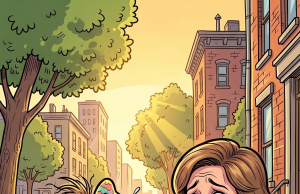
It was a bitter winter in 1996.
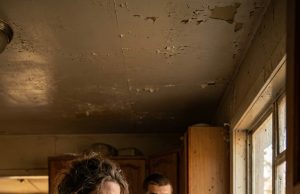
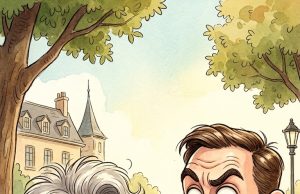
At a small elementary school on the outskirts of Zenica, the heating barely worked, and students sat through lessons wrapped in coats and scarves. In the last row sat Edin—a quiet boy who avoided attention and never volunteered to go to the blackboard.
It wasn’t because he lacked ability. Edin was smart.
It was because of his legs… and what covered his feet.
While his classmates wore winter boots, sneakers, or fashionable shoes, Edin came to school in his father’s old black rubber boots. They were far too large, so he stuffed them with folded newspapers to keep them from slipping off. They were scratched, muddy, and unmistakably poor.
Children noticed everything.
“Here comes the miner,” someone whispered as Edin entered the room.
“Did you park your tractor outside?” another laughed.
Edin’s face burned. He tucked his feet beneath the desk and said nothing. He despised those boots. He despised being poor. He hated the sound they made in the hallway—chap, chap—announcing him before he even spoke.
Teacher Amra noticed it all.
She was young and new to teaching, but she carried a gift no diploma could grant—deep human awareness. She saw how Edin lowered his eyes. She noticed how he always waited until the classroom emptied so no one would see his feet as he left.
One day, just before the long break, she said gently,
“Edin, stay behind a moment. I need your help in the teachers’ lounge.”
The children rushed out. Edin approached nervously, convinced he was in trouble.
“Come with me,” Amra said softly.
Inside the empty lounge, she closed the door and reached into her bag, pulling out a box.
“Edin,” she said, kneeling to meet his eyes, “my son received new shoes from Germany, but they’re too small. He refuses to wear them. I was thinking of giving them away… Would you like them? You’d actually be helping me.”
Inside the box were brand-new leather boots—tall, warm, untouched. They smelled of fresh leather.
Edin looked at her. There was no pity in her gaze—only kindness.
He knew she wasn’t telling the truth. The tags were still on.
But she was lying to protect his pride.
“But… I don’t have money,” he whispered.
Amra smiled. “No one is asking for money. But we do have an agreement.”
She held out her hand.
“This stays our secret. You’ll say an uncle sent them from abroad. Deal?”
Edin nodded through tears and shook her hand.
They fit perfectly.
That day, for the first time, Edin walked to the blackboard without shame. No chap, chap. No whispers. He wasn’t “the miner.” He was just a boy.
Twenty-five years passed.
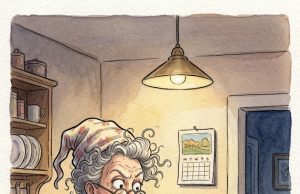
Amra grew old. Her husband died. Her children moved away and rarely called. She ended up in a state nursing home, living quietly on a small pension, her days blending together—television, knitting, waiting.
Until one morning.
The director entered her room, visibly emotional.
“Mrs. Amra, please get ready. You have a visitor.”
Amra smiled sadly. “That must be a mistake. No one visits me.”
“It’s no mistake,” he replied. “And… the visitor brought a truck.”
With her cane, Amra slowly made her way to the lobby.
A tall, well-dressed man stood there, holding a simple cardboard shoebox.
She studied his face, searching for something familiar.
He smiled—and in his eyes, she recognized the boy from long ago.
Slowly, the man knelt before her, just as she once had.
He opened the box.
Inside were the softest, warmest shoes imaginable—designed for tired, elderly feet.
“Teacher,” he said gently, “twenty-five years ago… you lied to me.”
Amra covered her mouth, tears spilling.
“I knew you knew,” she whispered.
“You said they were your son’s,” he continued. “But you didn’t have one. You bought them with your small salary so I wouldn’t feel ashamed. You didn’t give me charity—you gave me dignity.”
In front of everyone, Edin carefully removed her worn slippers and placed the new shoes on her feet.
“Today,” he said, “I own a shoe factory. Thousands of pairs pass through my hands. But none will ever matter to me like yours.”
The director stepped forward.
“Mrs. Amra… Mr. Edin also brought orthopedic mattresses for every resident. New shoes for everyone here. And for you…”
Edin took her hand.
“I paid for the renovation of this entire wing. The best apartment is reserved for you—for life. You will never be forgotten. Because the day you warmed my frozen feet, you showed me who I could become.”
Amra embraced him tightly.
That night, the nursing home in Zenica was no longer cold.
The mattresses were warm.
The shoes were warm.
But warmest of all was the love that returned—
after twenty-five years.
End.